Choosing the best GoLang course online can feel confusing when you’re just starting your programming journey. You may have heard that Go is useful for backend development, APIs, cloud applications, and scalable software. But knowing which course to choose and what to learn first is not always easy.
Some courses focus mainly on syntax. Others introduce advanced concepts before you have enough practice with the basics. As a beginner, you need a learning path that helps you understand the language, write your own code, solve problems, and gradually build working applications.
Go, also called Golang, is an open-source programming language known for its straightforward syntax, efficient compilation, and support for concurrent programming. The official Go website provides beginner tutorials, interactive exercises, and practical examples to help new developers get started.
The Go Programming Language+1
In this guide, we’ll explain what to look for in a GoLang course, which concepts to learn first, and how to turn your learning into practical development skills.
What Is GoLang, and Why Are Developers Learning It?
Go is a programming language developed at Google. Developers use it to build backend services, web APIs, command-line tools, and other software that needs to be reliable and efficient.
One reason Go is interesting for beginners is its relatively small set of core language concepts. You can start with basic programs and gradually progress to applications involving databases, network requests, and concurrent tasks.
For example, imagine you’re building a food delivery application. The application needs to receive orders, retrieve restaurant information, update delivery statuses, and communicate with other services. Go can be used to develop the backend services that handle these tasks.
Go is also used in cloud and infrastructure software, making it worth exploring if you’re interested in backend engineering.
However, learning Go does not automatically make someone job-ready. You still need to understand programming fundamentals, practise problem-solving, build projects, and learn how applications work outside a classroom.
What Should You Look for in the Best GoLang Course Online?
A good course should help you move from understanding code to writing it independently. Before enrolling, check whether the curriculum covers the following areas.
1. Go fundamentals for beginners
Start with the basics before moving to advanced development.
A beginner-friendly course should explain:
- Variables, constants, and data types
- Operators and expressions
- Conditional statements and loops
- Functions and return values
- Packages and modules
- Basic input and output
These concepts help you understand how programs work. If you already know another programming language, some topics may feel familiar, but you should still learn how Go handles them.
What to look for: Lessons should include small coding exercises, not just explanations or slides.
2. Data structures and Go-specific concepts
Once you understand the basics, learn how Go organises and handles data.
Important topics include:
- Arrays, slices, and maps
- Structs and methods
- Pointers
- Interfaces
- Packages and reusable code
- Error handling
Consider a simple example: you’re building a student management system. You need to store student names, organise their marks, and create functions to calculate results.
Learning these concepts helps you structure your code instead of writing everything inside one large function.
3. Practical backend development
If your goal is to become a backend developer, this is one of the most important parts of the course.
Look for lessons covering:
- HTTP fundamentals
- REST API development
- Request and response handling
- JSON encoding and decoding
- Database connections
- Input validation
- Error responses
For example, you could build an API that allows users to create tasks, view existing tasks, update their status, and delete completed tasks.
The official Go documentation includes a tutorial on building a RESTful web service using Go and the Gin framework. It is a useful reference for understanding how language fundamentals connect to backend development.
The Go Programming Language+1
4. Goroutines and channels
Concurrency is one of Go’s distinctive features.
Suppose a backend service needs to process several independent tasks. Go provides goroutines to run functions concurrently, while channels can help coordinate communication between goroutines.
A good course should explain:
- What concurrency means
- How goroutines work
- How channels communicate between goroutines
- How to coordinate concurrent work
- How to recognise and avoid common concurrency problems
You do not need to master every advanced pattern on your first day. Learn the fundamentals first, then practise with small examples.
5. Testing, debugging, and code quality
Writing code that works once is different from writing code that continues to work when something changes.
Your course should introduce:
- Basic unit testing
- Debugging techniques
- Handling unexpected input
- Reading error messages
- Writing readable functions
- Using Git for version control
These skills are useful when you work on larger projects or collaborate with other developers.
6. Projects that bring everything together
A course becomes much more useful when you apply what you’ve learned.
Look for projects that gradually increase in difficulty. You should write code, make mistakes, fix bugs, and understand why your solution works.
Projects should be explained clearly enough that you can eventually build similar applications without copying every line from the instructor.
GoLang Course Curriculum: What Should You Learn First?
Use this table as a checklist when comparing online courses.
| Learning stage | What to learn | Practice project |
| Beginner | Syntax, variables, loops, functions | Calculator or number guessing game |
| Core Go | Slices, maps, structs, methods | Student record manager |
| Intermediate | Interfaces, packages, error handling | File processing tool |
| Backend | HTTP, JSON, REST APIs | Task management API |
| Database | SQL and database integration | Expense tracker API |
| Advanced | Goroutines, channels, testing | Concurrent job processor |
| Deployment | Configuration, logging, deployment basics | Deployed backend service |
The exact order can vary depending on the course. The important thing is to build a strong foundation before rushing into advanced topics.
A Beginner’s GoLang Learning Roadmap
Step 1: Understand programming basics
Learn variables, conditions, loops, functions, and basic problem-solving.
Goal: Write small programs without following a tutorial line by line.
Step 2: Learn Go’s core features
Practise slices, maps, structs, methods, interfaces, and error handling.
Goal: Organise a small application into readable, reusable code.
Step 3: Build a backend API
Learn HTTP, JSON, database integration, and API testing.
Goal: Create an application that accepts requests and stores data.
Step 4: Practise real development workflows
Learn testing, Git, logging, configuration, and basic deployment.
Goal: Make your project easier to test, maintain, and demonstrate.
You can follow this roadmap at your own pace. Your progress will depend on your prior programming experience, practice time, and the complexity of the projects you build.
Projects You Can Build While Learning Go
Here are four practical ideas to help you apply your knowledge.
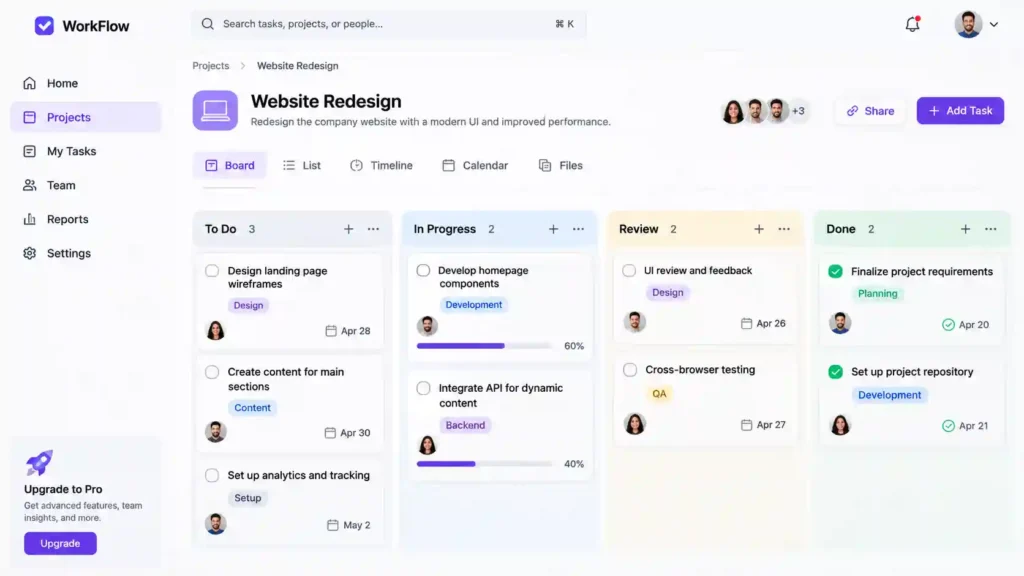
1. Task management API
Create endpoints to add, view, update, and delete tasks. Practise HTTP methods, JSON, routing, and error handling.
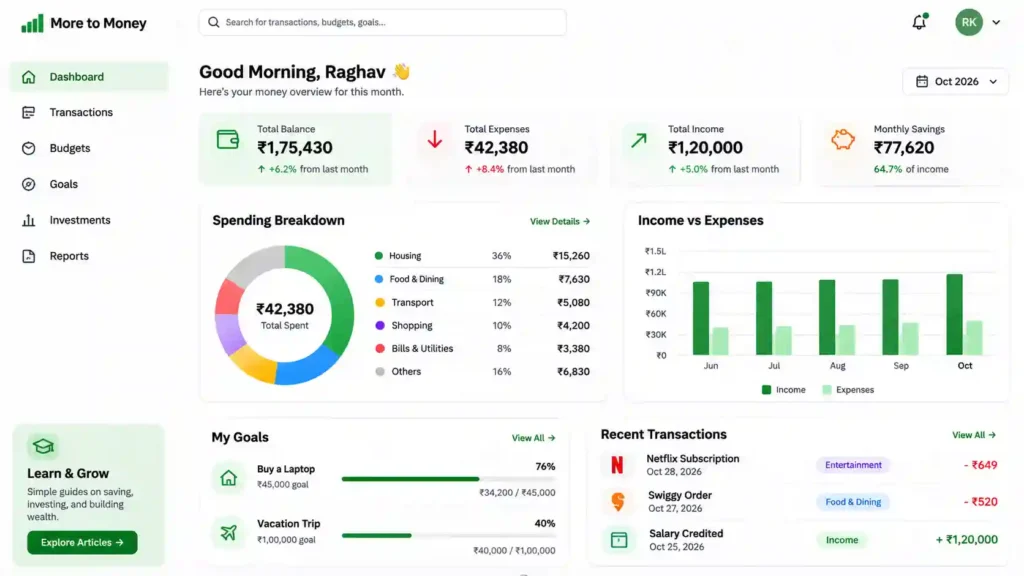
2. Expense tracker backend
Store expenses, categorise transactions, and calculate totals using a database.
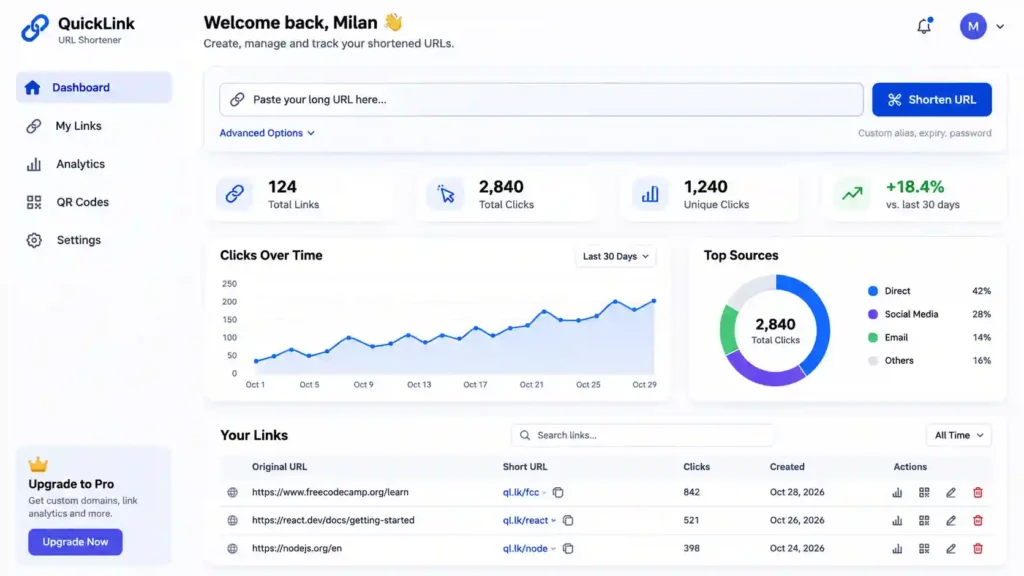
3. URL shortener
Convert long URLs into short links and practise routing, unique identifiers, and persistent storage.
4. Background job processor
Process several independent jobs and explore goroutines, channels, and concurrency.
For each project, write a short README explaining its purpose, technologies, setup instructions, and key features. If possible, publish the code in a Git repository and deploy an appropriate project so others can try it.
Free Resources vs. a Structured GoLang Course
You don’t necessarily have to pay to start learning Go. The official Go website provides free learning materials, including an interactive tour and practical examples.
The Go Programming Language+1
However, self-study can become difficult when you don’t know what to learn next or how to fix a problem.
| Learning approach | Works well when | Possible limitation |
| Official documentation | You want accurate language references | You must organise your own learning |
| Free video tutorials | You prefer seeing concepts demonstrated | Lessons may not form a complete learning path |
| Self-directed projects | You want to practise independently | You may need help with difficult bugs |
| Structured online course | You want a planned sequence of topics | Quality depends on the curriculum and support |
| Project-based course with guidance | You benefit from feedback and practical exercises | Check the level of mentor access and project depth |
You can also combine these methods. Use a structured course to guide your progress and official documentation to understand concepts more deeply.
Is the Wave IT Labs GoLang Course Worth Exploring?
If you’re looking for a structured way to learn Go, the Wave IT Labs GoLang course is worth reviewing.
Its published curriculum covers Go fundamentals, control flow, functions, structs, interfaces, REST APIs, and concurrency with goroutines. The course page also describes practical projects and self-paced lessons.
Wave IT Labs
Before enrolling, review the current curriculum and check whether the course matches your experience level and goals. In particular, consider whether you will get enough practice writing code independently, testing your applications, and building projects that demonstrate your skills.
A useful course should help you understand not only what to type, but also why the code works and how to adapt it when the requirements change.
Common Mistakes Beginners Should Avoid
Trying to learn everything at once: Start with Go fundamentals before moving into distributed systems, advanced concurrency, or complex architecture.
Watching tutorials without coding: Pause the lesson and recreate the examples yourself. Then change something and see what happens.
Copying projects without understanding them: You should be able to explain the purpose of each function and make small changes independently.
Ignoring error handling: Learn to check and handle errors instead of assuming every operation will succeed.
Building only one project: Try different kinds of projects so you can practise working with data, APIs, and concurrent tasks.
Expecting a course certificate to do all the work: A certificate can document your learning, but your practical skills, project explanations, and problem-solving ability matter too.
Frequently Asked Questions
1. Can a complete beginner learn GoLang online?
Yes. You can start with basic programming concepts and gradually learn Go syntax, functions, data structures, and backend development. If you’ve never programmed before, choose a course that explains the fundamentals instead of assuming prior knowledge.
2. How long does it take to learn GoLang?
There is no fixed timeline. Basic syntax may take a few weeks of consistent practice, while building confidence with APIs, databases, testing, and concurrency can take considerably longer. Your progress depends on your starting point and the time you dedicate to practice.
3. Do I need to know Python, Java, or C++ before learning Go?
No. Prior programming experience can make the process easier, but it isn’t mandatory. Beginners can learn Go directly, provided they choose learning material that covers basic programming concepts.
4. Is GoLang useful for backend development?
Yes. Go is used to develop web services, APIs, command-line tools, and cloud-related software. It is particularly worth exploring if you enjoy server-side programming and building efficient services.
5. What should a good GoLang course include?
Look for language fundamentals, data structures, error handling, packages, REST APIs, database integration, concurrency, testing, and practical projects. Choose a curriculum that progresses logically and gives you opportunities to write code yourself.
6. Is GoLang enough to get a backend developer job?
Learning Go is a useful starting point, but backend development involves more than one language. You should also learn HTTP, databases, API design, testing, Git, deployment basics, and problem-solving. The skills required will depend on the role.
7. Should I learn GoLang through free resources or a paid course?
Both approaches can work. Free resources are useful if you are comfortable planning your own learning. A structured course may help if you prefer a guided sequence, practical assignments, and access to support.
Conclusion: Choose a Course That Helps You Build, Not Just Watch
The best GoLang course online is one that matches your current level, explains concepts clearly, and gives you enough practice to build applications independently.
Start with the fundamentals, move on to data structures and backend APIs, and then explore concurrency, testing, and deployment. Build projects along the way so that every new concept has a practical purpose.
If you want a structured starting point, explore the Wave IT Labs GoLang course and review its curriculum before choosing your learning path.
Ready to start learning Go? Pick your first project, write your first program, and keep building one skill at a time.
Suggested image alt text: Beginner learning GoLang programming through an online course with practical coding exercises.